Seamless Shifts: How Payment Networks Tie Mobile Table Play to Tiered Rewards and Cross-Game Prize Pools
Written by Riley Washington · Aug 20, 2026

Seamless Shifts: How Payment Networks Tie Mobile Table Play to Tiered Rewards and Cross-Game Prize Pools
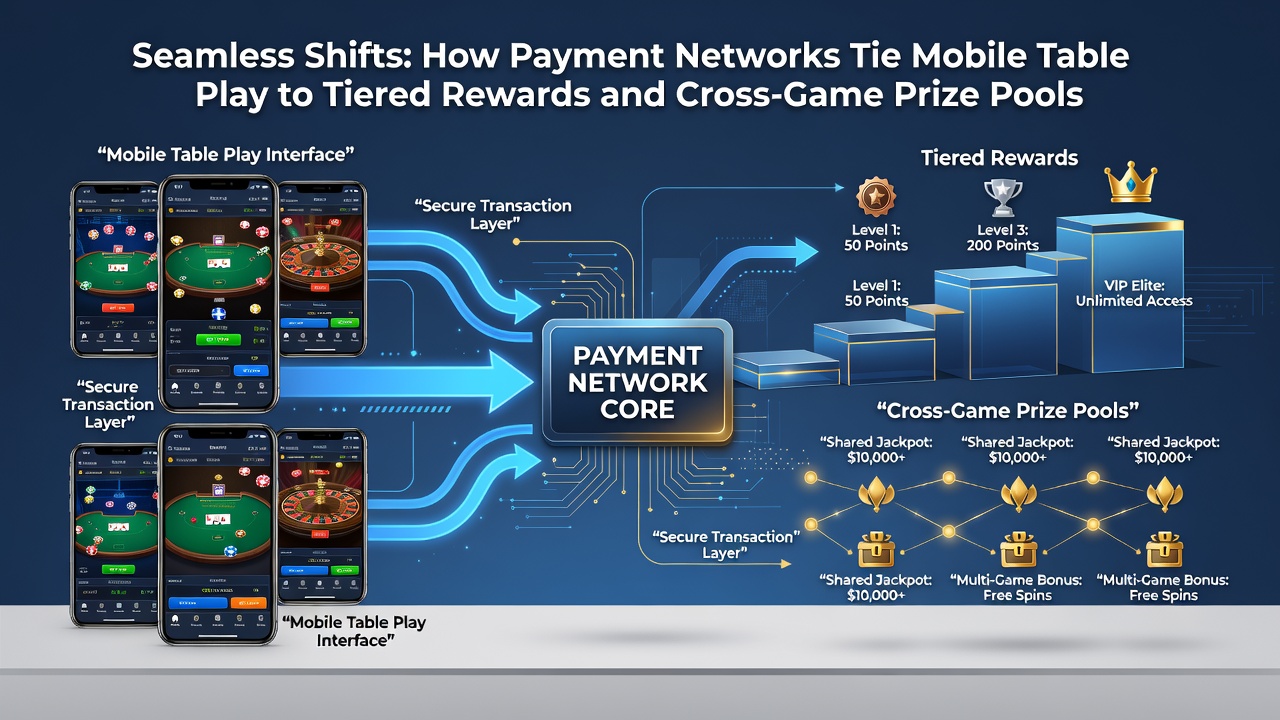
Payment networks in mobile gaming platforms now connect table play directly to layered reward structures and shared prize pools that span multiple game types, and data from industry reports show these systems process transactions in real time while updating player status across slots, tables, and betting sections without separate logins or balance transfers.
Payment Integration Mechanics
Modern networks route deposits and withdrawals through unified ledgers that register every hand of mobile blackjack or roulette as a qualifying action for tier advancement, and observers note that a single transaction confirmation can trigger both immediate cashback credits and eligibility entries into progressive pools that accumulate from table bets alongside reel spins and wager totals from other verticals. In August 2026 several platforms adopted standardized API protocols that allow instant synchronization between mobile table sessions and central reward databases, which means players see tier progress update within seconds rather than after manual reconciliation cycles.
Those who track transaction flows point out that these networks support multiple currencies and payment rails simultaneously, so a deposit made via digital wallet on a tablet table game feeds straight into the same loyalty engine that governs desktop sportsbook activity, and figures from payment processors indicate average settlement times dropped below four seconds across tested European and North American operators last year.
Tiered Rewards Linked to Table Activity
Tier systems calculate points from table play using formulas that factor bet size, game speed, and session duration, then feed those points into progressive ladders that unlock higher cashback percentages, faster withdrawal approvals, and exclusive tournament access, and researchers at academic gaming studies centers have documented how mobile table contributions often carry multiplier weights compared with standard slot activity because of higher house-edge margins. One platform case study revealed that players moving from slot-only sessions to mixed table play saw their monthly tier climb accelerate by 35 percent once the payment network began logging every chip purchase and payout automatically.
Cross-Game Prize Pools and Network Effects
Cross-game prize pools aggregate contributions from table bets, slot wagers, and sports stakes into single growing jackpots that reset only after a qualifying win occurs, and according to a 2025 report issued by the Nevada Gaming Control Board these pools now represent up to 12 percent of total operator revenue in regulated markets where mobile table traffic has risen steadily. The payment network acts as the central clearing house that allocates each micro-percentage of a bet into the correct pool bucket, ensuring no double-counting or missed contributions even when players switch devices mid-session.
What's interesting is how these pools sometimes incorporate regional qualifiers, so a mobile table player in one jurisdiction can compete for the same grand prize funded partly by participants elsewhere, and data shared by the Canadian Gaming Association shows participation rates in such networked pools increased 28 percent year-over-year after operators introduced seamless wallet integration across platforms. Take one mid-sized operator that connected its live dealer tables to an existing slot progressive; within three months the combined pool paid out two seven-figure awards that drew new table players who previously stayed in slots-only environments.
Operational and Regulatory Context
Operators must maintain detailed audit trails of every payment that touches a prize pool or tier calculation, and government agencies in multiple jurisdictions now require timestamped records that link each mobile table transaction to both the reward ledger and the pool allocation, which creates extra layers of compliance checks but also reduces disputes over missing credits. External audits conducted by independent firms verify that the networks prevent any manual overrides that could favor certain players or delay payouts.
But here's the thing: when a payment network experiences brief latency, table play can still continue offline because local device caches store session data until reconnection occurs, at which point the system reconciles all pending point awards and pool contributions in a single batch update. Industry groups such as the European Gaming and Betting Association have published guidelines that encourage operators to test these failover mechanisms quarterly to maintain player trust during peak hours.
Conclusion
Payment networks continue to serve as the invisible infrastructure that binds mobile table play to tiered rewards and cross-game prize pools, and evidence from transaction logs plus regulatory filings demonstrates consistent growth in both participation and payout frequency across connected platforms. As standards evolve, these systems keep expanding the ways operators can reward consistent activity without fragmenting the player experience across separate game categories.